
Knee pain is one of those things people put up with for far longer than they should. A dull ache becomes a constant companion. Stairs become something to dread. A walk that used to take 20 minutes now feels like a negotiation with your own body.
The good news is that knee pain is one of the most treatable conditions in musculoskeletal medicine. The range of options available today — from simple self-care to advanced injectable treatments — means that the vast majority of people can get meaningful relief without jumping straight to surgery.
But treatment is not one-size-fits-all. What works brilliantly for a 35-year-old runner will not necessarily be the right approach for a 65-year-old with osteoarthritis. The right treatment depends entirely on what is causing the pain — and that starts with getting a proper diagnosis.
This guide walks through every treatment option in plain language, from the simplest home measures to the most advanced clinical interventions, so you can understand what is available and make an informed decision about your next step.
If you want a broader understanding of what causes knee pain in the first place, the Dr SNA Clinic blog has detailed guides covering the most common conditions — including osteoarthritis, ligament injuries, meniscus tears, and runner’s knee.
Step One — Getting the Right Diagnosis
Before any treatment, you need to know what you are actually treating.
This sounds obvious, but it is where the process most often goes wrong. People self-diagnose from symptom checkers, apply the wrong treatment, and then conclude that “nothing works” — when in reality, they were treating the wrong problem.
A proper clinical assessment should include:
- A thorough review of your symptoms — when it started, what makes it worse, what eases it, whether it came on suddenly or gradually
- A physical examination of the joint — checking for swelling, warmth, tenderness, range of movement, and stability
- Imaging where appropriate — an X-ray shows bone changes and joint space narrowing; an MRI gives a detailed view of soft tissues including cartilage, ligaments, and the meniscus; ultrasound is useful for assessing soft tissue and guiding injections
Only once you have a clear diagnosis can you build a treatment plan that will actually work.
Dr Syed Nadeem Abbas — consultant at Dr SNA Clinic on Wimpole Street, London — always conducts a full clinical assessment and reviews available imaging before recommending any treatment. His background in NHS Trauma and Orthopaedics means he assesses the knee the way a surgeon would — not just to decide what to inject, but to understand the full picture of what is happening in the joint.
Self-Care at Home — The Right First Response
For mild to moderate knee pain, particularly when it has come on recently or follows a period of increased activity, self-care measures are the appropriate starting point. They cost nothing, carry no risk, and work well for a significant proportion of people.
Rest
Give the joint a break from whatever is aggravating it. This does not mean total bed rest — complete inactivity tends to make joint stiffness worse. It means reducing or stopping the specific activity that is driving the pain. A day or two of rest may be enough for a minor strain. More significant injuries need longer.
Ice
Ice reduces both pain and inflammation and is most effective in the first 48 to 72 hours after an acute injury or flare-up. Use an ice pack wrapped in a thin cloth — never apply ice directly to skin. Apply for 15 to 20 minutes at a time. Do not exceed 20 minutes in one session, as prolonged application can damage the skin and nerves. A bag of frozen peas works just as well as a purpose-made ice pack and moulds to the shape of the knee more easily.
Heat
Heat is more useful for chronic stiffness and muscle tension around the knee than for acute inflammation. A heat pack or warm compress applied to the area can help loosen a stiff joint, particularly first thing in the morning when osteoarthritis stiffness is at its worst. Avoid heat in the first 48 hours after an acute injury.
Compression
A compression bandage or knee support helps reduce swelling and provides a degree of stability. Choose one that is lightweight, breathable, and fits snugly without being so tight it restricts circulation. You should be able to slide two fingers under the bandage comfortably.
Elevation
When swelling is present, elevating the leg helps reduce fluid accumulation in the joint. Propping the leg on pillows when resting, or sitting with the leg raised, can make a noticeable difference to swelling by the end of the day.
Weight Management
This one does not get mentioned often enough. Every additional kilogram of body weight places roughly four kilograms of extra force through the knee joint with every step. Even modest weight loss — five to ten per cent of body weight — can produce a measurable reduction in knee pain and slow the progression of osteoarthritis significantly.
Over-the-Counter Pain Relief
When self-care alone is not managing the pain adequately, over-the-counter medications can help.
Paracetamol
Paracetamol is the first-line recommendation from NICE for mild to moderate knee pain. It is effective, well-tolerated, and has a far lower risk of gastrointestinal side effects than anti-inflammatory drugs. Always follow the dosage instructions on the packaging. Do not exceed the recommended daily dose.
Topical NSAIDs
Topical anti-inflammatory gels — such as diclofenac gel applied directly to the knee — are often recommended as a next step before oral anti-inflammatory tablets. They deliver the active ingredient directly to the affected area with lower systemic absorption, making them a safer option particularly for older adults or those with stomach, kidney, or heart conditions.
Oral Anti-Inflammatory Tablets
Oral ibuprofen or naproxen can provide useful short-term relief for significant knee pain or inflammation. They should be used at the lowest effective dose for the shortest necessary period. Take them with food. They are not appropriate as a long-term daily treatment and should be used with caution in people with a history of stomach ulcers, kidney problems, or cardiovascular conditions. Always check with your GP if you are unsure.
Topical Creams Containing Capsaicin or Lidocaine
Some people find relief from creams containing capsaicin — the compound that makes chilli peppers hot — or lidocaine, a local anaesthetic. These work by temporarily altering pain signals from the skin surface. They can be useful as an additional layer of relief but are not a treatment for the underlying cause.
Physiotherapy — The Most Underutilised Treatment
Physiotherapy is consistently underestimated as a treatment for knee pain. People try it half-heartedly for a couple of weeks, do not notice a dramatic change, and give up. That is not how it works.
Physiotherapy for knee pain works by strengthening the muscles that support and protect the joint — primarily the quadriceps at the front of the thigh, the hamstrings at the back, and the hip abductors. When these muscles are stronger and better coordinated, the knee itself absorbs less impact and stress with every movement.
A good physiotherapist will also assess your movement patterns, identify any biomechanical issues contributing to your pain, and give you exercises specifically tailored to your condition. Exercises that are wrong for your specific diagnosis can make things worse — which is another reason why diagnosis first, treatment second always applies.
For patellofemoral pain syndrome (runner’s knee) in particular, physiotherapy with a focus on quadriceps and hip strengthening is the primary treatment and produces excellent results in most patients when followed consistently.
For knee osteoarthritis, physiotherapy does not reverse the structural changes, but it can meaningfully reduce pain and improve function — often as effectively as medication in the medium term.
Braces, Supports, and Orthotics
Mechanical supports are not glamorous, but they can make a genuine practical difference for certain presentations of knee pain.
Knee braces range from simple compression sleeves to custom-fitted offloading braces. For medial compartment osteoarthritis — where cartilage wear is predominantly on the inner side of the joint — a valgus offloading brace shifts the load away from the damaged compartment and can reduce pain meaningfully during activity.
Arch supports and shoe insoles with a small heel wedge can help redirect forces through the knee for patients with osteoarthritis, reducing stress on the most affected compartment.
Patellar taping is used in physiotherapy for patellofemoral pain syndrome and can provide immediate relief during exercise by improving kneecap tracking.
None of these options address the underlying cause, but as part of a broader management plan they can significantly improve day-to-day function.
Injection Treatments — A More Targeted Approach
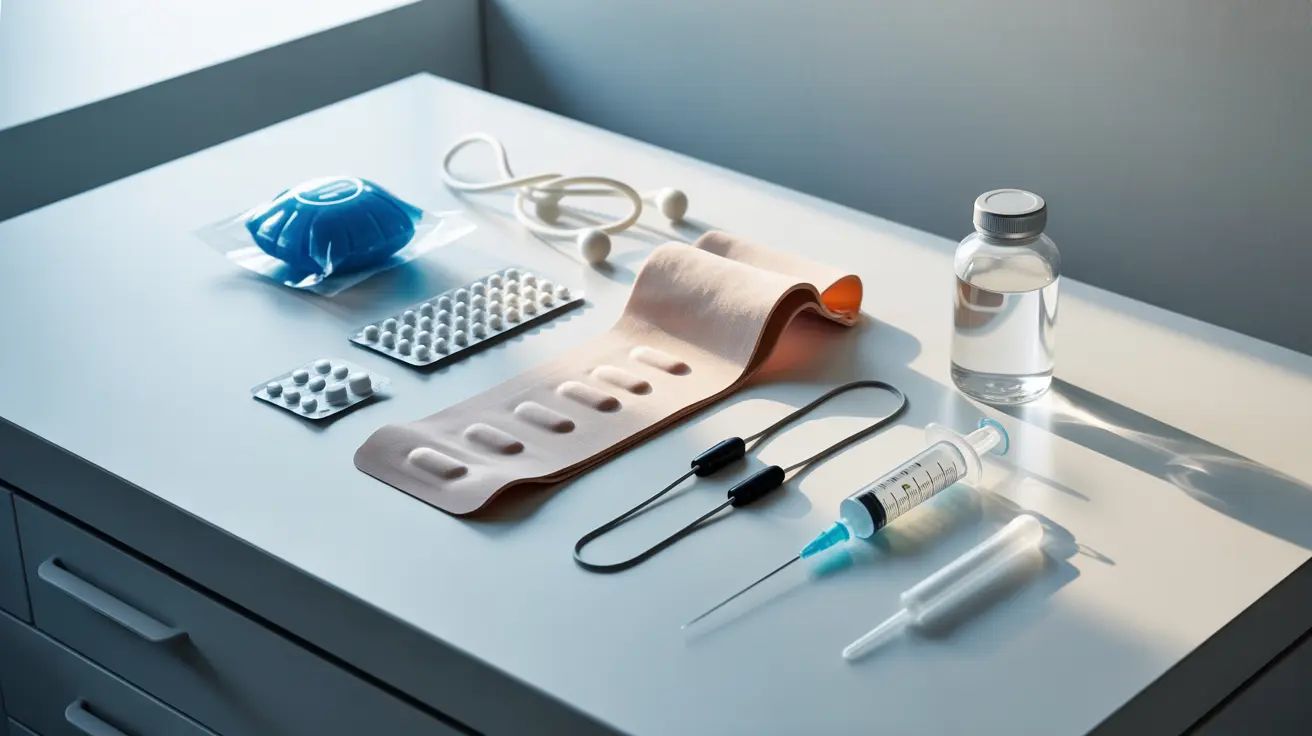
When self-care, medication, and physiotherapy have not produced adequate relief, injection treatments offer a more direct intervention into the joint itself.
Corticosteroid (Steroid) Injections
Steroid injections deliver a powerful anti-inflammatory directly into the knee joint. They can provide significant pain relief — sometimes within days — and the effect can last from a few weeks to a few months depending on the individual.
They are most useful for acute inflammatory flare-ups — periods when the knee is particularly swollen, hot, and painful. For this purpose, they work well.
The limitation is that steroids do not address the underlying structural problem. They reduce inflammation temporarily, and once the effect wears off, the pain typically returns. More importantly, repeated steroid injections can accelerate cartilage damage over time. Most guidelines recommend no more than three to four steroid injections into the same joint per year.
Hyaluronic Acid Injections
Hyaluronic acid injections attempt to supplement the knee’s natural joint fluid, which becomes thinner and less effective as a lubricant in osteoarthritis. The evidence for these injections is mixed, and NICE no longer recommends hyaluronic acid injections for knee osteoarthritis as part of routine care. Some patients report benefit, but the evidence base does not support them as a standard treatment.
Platelet-Rich Plasma (PRP) Injections
PRP uses growth factors concentrated from your own blood to stimulate tissue repair and reduce inflammation within the joint. The evidence base is growing, and some studies show meaningful benefit for knee osteoarthritis — particularly in younger patients with less severe disease.
Arthrosamid Injection — A Significant Advance in Knee Pain Treatment
For patients with mild to moderate knee osteoarthritis who have not responded adequately to physiotherapy and conservative treatment, Arthrosamid injection represents one of the most significant developments in non-surgical knee pain management in recent years.
Arthrosamid is a non-biodegradable hydrogel — 97.5% water and 2.5% cross-linked polyacrylamide — that is injected into the knee joint under ultrasound guidance. Unlike steroid injections, which reduce inflammation temporarily, Arthrosamid integrates with the synovial tissue lining the joint and works by improving joint elasticity, cushioning, and resilience from within.
Because it is non-biodegradable, it does not break down in the body. Clinical studies report sustained improvements in pain and function for up to five years from a single injection. A published five-year follow-up study confirmed continued meaningful benefit at that point.
For the right patient, Arthrosamid offers something that no other injectable treatment currently does: lasting structural support inside the joint from a single procedure.
At Dr SNA Clinic, Mr S N Abbas performs every Arthrosamid injection personally using ultrasound guidance for precise placement. He uses a dual-spin centrifuge protocol for any PRP component and follows the official Arthrosamid guidelines including prophylactic antibiotics. The procedure takes 30 to 45 minutes and most patients return to light activity the same day.
Arthrosamid is not suitable for everyone. It is most appropriate for patients with mild to moderate osteoarthritis who have already tried conservative treatment without sufficient relief, and who are not yet at the stage where joint replacement is indicated. A thorough consultation is always the first step. You can find more detail on the Arthrosamid injection page.
Surgical Options — When Other Treatments Have Been Exhausted
Surgery is not the first response to knee pain — and for most people, it never needs to be. But for certain conditions and at certain stages of severity, it becomes the most appropriate option.
Arthroscopic Surgery
Arthroscopy is a keyhole procedure using a small camera and fine instruments inserted through tiny incisions around the knee. It can be used to:
- Remove or repair a torn meniscus
- Remove loose bodies (fragments of cartilage or bone) floating in the joint
- Smooth damaged cartilage surfaces
- Reconstruct torn ligaments in some cases
Recovery from arthroscopic surgery is generally faster than open surgery, though it still requires a structured rehabilitation period.
Partial Knee Replacement
When osteoarthritis affects only one compartment of the knee — most commonly the medial (inner) compartment — a partial knee replacement replaces only the damaged portion with metal and plastic components. Recovery is generally faster than total replacement, and the procedure preserves more of the natural knee structure.
Total Knee Replacement
Total knee replacement is the most significant surgical intervention for knee pain. The surgeon removes the damaged bone and cartilage surfaces and replaces them with artificial components. It is a major procedure with a substantial recovery period — typically three to six months before return to normal activity — but for patients with severe, debilitating osteoarthritis that has not responded to other treatment, it can be genuinely life-changing. It is not a decision to take lightly. Many patients who are told they may need a knee replacement are actually at a stage where advanced non-surgical options — including Arthrosamid injection — could provide meaningful relief and delay or avoid the need for surgery altogether.
Osteotomy
Osteotomy involves cutting and reshaping the tibia (shinbone) or femur (thighbone) to redistribute load away from the most damaged compartment of the knee. It is most often used in younger, active patients with osteoarthritis affecting primarily one side of the joint, where a partial or total replacement would not last as long due to high activity levels.
Complementary Approaches
Acupuncture
There is some evidence that acupuncture provides modest pain relief for knee osteoarthritis. NICE acknowledges it as an option in its chronic pain guidance. It is not a cure, and results vary considerably between individuals, but some patients find it a useful addition to their overall management.
Exercise and Lifestyle
Low-impact exercise is one of the most evidence-based interventions for knee osteoarthritis. Swimming, cycling, and walking on flat ground all maintain joint mobility and strengthen supporting muscles without placing excessive stress through the knee. Staying active is consistently better for long-term joint health than rest. Yoga and tai chi have evidence behind them for improving balance, flexibility, and pain in older adults with knee osteoarthritis — and both carry a very low risk of aggravating the joint.
How to Choose the Right Treatment for Your Knee
Here is a practical guide to match the stage of your knee pain with the most appropriate treatment pathway:
| Situation | Most Appropriate Starting Point |
| Recent onset, mild pain after activity | Rest, ice, paracetamol, activity modification |
| Persistent pain not settling after 4 to 6 weeks | GP assessment, physiotherapy referral |
| Pain affecting daily life despite physio | Clinical assessment with a knee specialist |
| Moderate osteoarthritis, failed conservative treatment | Consider Arthrosamid injection or other advanced options |
| Acute inflammatory flare-up | Steroid injection for short-term relief |
| Instability, locking, or suspected ligament/meniscus injury | Urgent clinical assessment, likely MRI |
| Severe osteoarthritis, significant disability | Surgical assessment — partial or total knee replacement |
When Should You See a Specialist?
Most knee pain does not need specialist input immediately. But certain signs suggest you should seek professional assessment sooner rather than later:
- Significant swelling that appeared quickly after an injury
- Inability to bear weight or straighten the knee fully
- A feeling that the knee might give way
- Locking — the knee getting stuck and unable to bend or straighten
- Pain that has not improved after six weeks of appropriate self-management
- Night pain or pain at rest that is getting progressively worse
- Knee pain in someone under 40 — younger patients need careful assessment to rule out inflammatory conditions
If you are in London and looking for an expert assessment, Dr Syed Nadeem Abbas at Dr SNA Clinic offers a full consultation for £100, fully redeemable against any subsequent treatment. He will give you an honest, thorough assessment of what is actually happening in your knee — and what your options genuinely are.
Frequently Asked Questions

What is the fastest way to treat knee pain at home?
For acute pain and swelling: rest the joint, apply an ice pack wrapped in a cloth for 15 to 20 minutes, take paracetamol at the recommended dose, and elevate the leg when sitting. For most minor injuries, this combination produces noticeable improvement within 48 to 72 hours.
Is it better to rest or keep moving with knee pain?
It depends on the cause. For acute injuries — particularly ligament or meniscus damage — some initial rest is appropriate. For osteoarthritis and most chronic knee conditions, keeping gently active is almost always better than prolonged rest. Complete inactivity weakens the supporting muscles and stiffens the joint. Low-impact movement — swimming, cycling, gentle walking — is generally the better choice.
How long does knee pain take to go away?
Minor knee pain following overuse or a mild strain can resolve within a week or two with appropriate self-care. More significant injuries or chronic conditions like osteoarthritis require longer management. Arthrosamid injection, for example, produces its main improvement over eight to twelve weeks, with benefits sustained for up to five years in suitable patients.
Can knee pain be treated without surgery?
In the majority of cases, yes. Surgery is never the first option and is rarely unavoidable. Many patients who are told they may need a knee replacement have not yet exhausted non-surgical options. Advanced treatments like Arthrosamid injection have allowed significant numbers of patients to avoid or substantially delay joint replacement surgery.
What is the best injection for knee pain?
It depends on what is driving the pain. For acute inflammatory flare-ups, a corticosteroid injection provides fast relief. For mild to moderate osteoarthritis with persistent symptoms despite conservative management, Arthrosamid injection currently offers the strongest evidence for long-lasting benefit from a single procedure — with clinical studies showing sustained improvement for up to five years.
Does physiotherapy actually help knee pain?
Yes — consistently and significantly, when done correctly and followed through. Physiotherapy is not a passive treatment. It requires active participation and takes weeks to produce meaningful results. Studies consistently show that targeted exercise therapy for knee osteoarthritis improves pain and function as effectively as many surgical interventions in the medium term.
Can I get Arthrosamid on the NHS?
No. Arthrosamid is currently available only as a private treatment. NICE has not yet endorsed it as a standard NHS pathway, though the clinical evidence base continues to grow. More information is available on the Arthrosamid injection page at Dr SNA Clinic.
The Bottom Line
The spectrum runs from ice packs and paracetamol all the way to total knee replacement. Most people find what they need somewhere in between — often with physiotherapy, targeted lifestyle changes, and in the right cases, an advanced injection treatment that addresses the joint directly.
If you have been managing knee pain for months or years without adequate relief, the most useful step you can take right now is to get a proper clinical assessment from someone who will give you an honest answer about what is actually going on — and what genuinely makes sense for your specific situation.
The Dr SNA Clinic blog has further guides covering specific conditions, treatment comparisons, and what to expect from different procedures. Or if you are ready to speak to a specialist, Mr S N Abbas at Dr SNA Clinic, 48 Wimpole Street, London, is available for a full consultation at £100 — fully redeemable against treatment.
Medically reviewed by Mr S N Abbas, MBBS, MRCSEd — Consultant in Orthopaedics and Regenerative Medicine, Dr SNA Clinic, 48 Wimpole Street, Marylebone, London W1G 8SF. Updated June 2026.


