
A man James was 47. He sat in a quiet consultation room in North London, feeling stuck. He had tried lifestyle changes, supplements, and one round of prescription medication. Nothing had made a lasting difference. His GP then mentioned a clinic where men were receiving something called a P shot. James had never heard of it. He left with a name written on a piece of paper — and, for the first time in months, a sense of hope.
That story is more common than many people realise. Across the UK, thousands of men quietly deal with issues around sexual performance, sensitivity, and confidence. Most never seek help. Some eventually find their way to treatments like the priapus shot — a procedure that has grown steadily in clinical use over the last decade.
This article explains what the P shot treatment is, how it works, what the evidence shows, and what men in London can realistically expect from it.
What Is the Priapus Shot?
The priapus shot — also written as the p-shot — is a non-surgical medical procedure for men. It uses platelet-rich plasma (PRP), which the clinic extracts from the patient’s own blood. A doctor then injects this PRP directly into specific areas of the penis.
The name comes from Priapus, the ancient Greek god of fertility. Dr Charles Runels, an American physician, developed and trademarked the treatment. Since then, clinics across the UK and Europe have adopted it into their practices.
The p injection contains no synthetic drugs or foreign substances. Because it uses the patient’s own plasma, the body does not reject it. This sets the pshot apart from older penile injection treatments that relied on chemical compounds.
Why Do Men Choose This Treatment?
Men choose the p shot treatment for several reasons. Some want to improve erectile function. Others notice reduced sensitivity over time and hope to restore it. A smaller group seeks gradual changes in girth or length through a course of sessions.
The priapus shot is not a guaranteed cure for erectile dysfunction (ED). The NHS treats ED primarily with PDE5 inhibitors — such as sildenafil — as a first-line option. However, not every man responds well to oral medication. For those men, regenerative approaches like PRP therapy offer a clinically grounded alternative.
How Does the Priapus Shot Work? A Step-by-Step Guide
The procedure follows a clear, predictable sequence. Knowing each step helps men feel informed and confident before their appointment.
Step 1 — Blood Draw
A nurse or doctor draws a small amount of blood from the patient’s arm. This is identical to a standard blood test. The volume is usually between 20 and 30 ml.
Step 2 — Centrifuge Processing
The blood sample goes into a medical centrifuge. This machine spins at high speed, separating the blood into its components. The spinning concentrates the platelets into a rich plasma solution — giving the treatment its name.
Step 3 — Numbing the Treatment Area
A topical anaesthetic cream is applied to the area before any injection. The practitioner allows time for the cream to take full effect. Most men report very little discomfort during the procedure itself.
Step 4 — Injecting the PRP
The doctor uses a very fine needle to inject the PRP into the shaft and, in some cases, the glans. These injection sites target areas with high concentrations of smooth muscle and nerve tissue — the key zones for penile injection growth.
Step 5 — Discharge and Recovery
You’re discharged the same day. No downtime, no hospital stay — just a straightforward path to recovery and regeneration.
What Does the Science Say?
PRP has a well-established track record in orthopaedics, dermatology, and wound care. Research into its use in sexual medicine is more recent — but the evidence is growing year by year.
A 2017 study published in the Journal of Sexual Medicine found that PRP injections improved erectile function scores in men who had not responded to oral ED drugs. Researchers reported improvements in blood flow and tissue regeneration in treated areas.
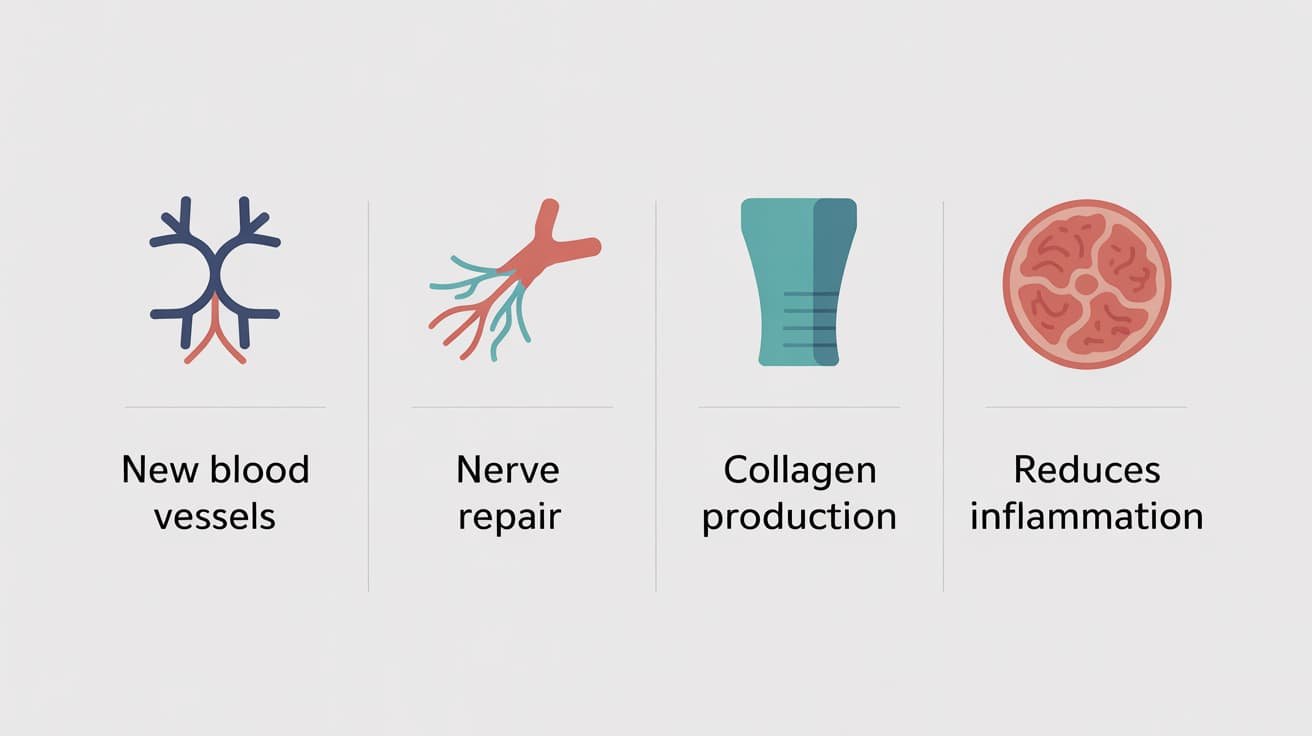
Growth factors within PRP — including platelet-derived growth factor (PDGF) and vascular endothelial growth factor (VEGF) — stimulate the repair of blood vessels and soft tissue. In the penis, this can translate to improved circulation, better nerve sensitivity, and firmer erections over time.
It is important to be transparent here. NICE (the National Institute for Health and Care Excellence) has not yet issued formal guidance specifically on PRP for erectile dysfunction. The evidence base continues to grow. Responsible clinics position PRP as a supportive option — not a replacement for established, NICE-approved treatments.
What Results Can Men Expect?
Results vary between individuals. Age, general health, and the number of sessions completed all influence outcomes. Reputable clinics give honest expectations rather than fixed promises.
Reported outcomes from clinical observations and patient reviews include:
- Improved firmness and duration of erections
- Greater sensitivity in the glans and shaft
- Modest improvements in length and girth over a treatment course
- Better response to oral ED medication when used alongside the p shot
- Improved sexual confidence and satisfaction
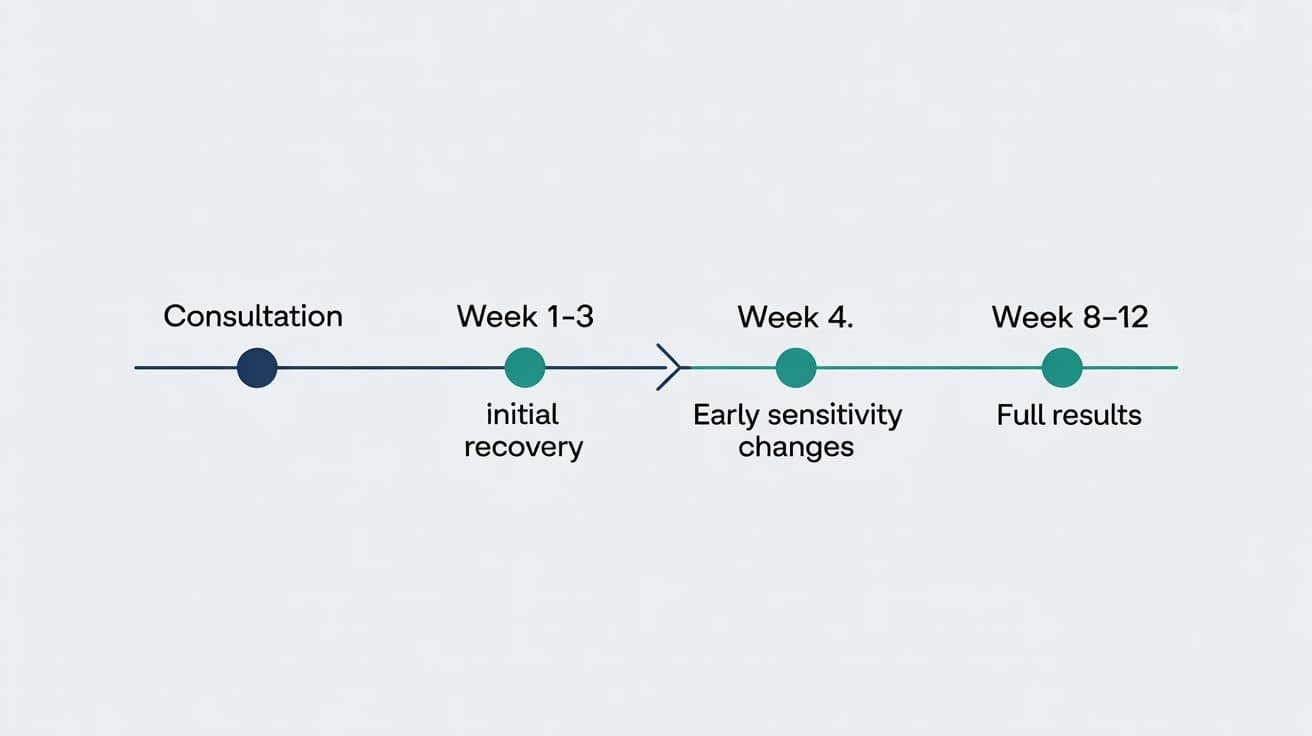
Many men research p shot before and after accounts before making a decision. Because the treatment works through tissue regeneration, changes build gradually. Most men notice early signs of improvement between two and six weeks after their first session. Peak results from a full course typically appear at three to six months.
For those comparing p-shot before and after outcomes, it is worth focusing on structured clinical case notes rather than unverified social media posts. Individual responses differ, and no ethical clinic will promise identical results to every patient.
P Shot London Choosing the Right Clinic
Selecting a provider for p shot london treatment requires careful research. This is a medical procedure. Only a qualified doctor or a practitioner working under direct medical supervision should perform it.

Key questions to ask before booking include:
- Is the lead clinician registered with the GMC?
- What PRP processing system does the clinic use — and is it CE-marked?
- Does the clinic offer a full medical consultation before any injection?
- Is the clinic located within a regulated medical environment?
- Does the practitioner carry medical indemnity insurance?
Harley Street clinics like drsnaclinic.com, led by Dr Syed Nadeem Abbas — a surgeon trained at Cambridge, Oxford, and the Royal London Hospital, with an MSc in Aesthetic Plastic Surgery with Distinction from Queen Mary University London — offer the rigorous clinical framework that procedures like the priapus shot london demand. Dr Abbas’s surgical and scientific background means he understands the anatomy and tissue science behind this treatment in depth.
Priapus Shot Price and Cost in the UK
When considering the Priapus Shot in the UK, it is important to note that prices start around £1250, yet they can rise depending on the clinic. Moreover, London-based practices often charge more due to their reputation and central location. In addition, the expertise of the practitioner plays a significant role, as specialists in sexual health may set higher fees. Furthermore, treatment packages that include consultations or follow-up care can increase the overall cost. Consequently, patients should compare clinics carefully, weighing both price and quality before making a decision.
Is the P Shot Safe?
Because PRP comes directly from the patient’s own blood, the risk of allergic reaction or immune rejection is extremely low. The procedure uses sterile, single-use equipment in a clinical setting. Side effects, when they do occur, tend to be mild and short-lived.
Common Side Effects
- Mild bruising or swelling at the injection site
- Temporary sensitivity or mild discomfort — usually resolves within 48 hours
- Minor redness around the injection points
Less Common Side Effects
- Temporary firmness in the treated tissue as PRP activates local growth factors
- Slight asymmetry during the early healing phase — typically self-resolving
Serious complications are rare when a qualified practitioner performs the procedure using proper technique and sterile equipment. Men with bleeding disorders, active genital infections, or certain blood conditions are not suitable candidates. A thorough medical consultation takes place before any injection is given.
Who Is a Good Candidate for the P Shot?
The priapus shot works best for a specific group of men. A good candidate typically meets most of the following criteria:
- Men with mild to moderate erectile dysfunction
- Men wanting to improve sensitivity following prostate treatment or nerve involvement
- Men who have not fully responded to oral ED medication alone
- Men seeking a non-surgical approach to gradual penile enlargement
- Men in good general health with no active blood or clotting disorders
Younger men in good health often see a stronger tissue response, as their natural growth factor activity is higher. Older men can still benefit — results may simply take a little longer to develop fully.
The treatment is not suitable for men with active penile infections, Peyronie’s disease during an acute flare, or those currently taking anticoagulant medication. A detailed consultation clarifies suitability for each individual case.
P Shot UK — Availability and Regulation
Access to P shot UK wide has improved significantly over the past five years. Clinics in London, Manchester, Birmingham, and Edinburgh now offer the treatment. However, standards vary considerably between providers.
The UK does not yet have a single national regulatory framework specifically for PRP treatments. This makes the practitioner’s qualifications and the clinic’s governance standards particularly important. The GMC’s guidance on cosmetic interventions states that any procedure carrying a clinical risk should be performed only by or under the direct supervision of a registered doctor.
Men researching this treatment should treat any clinic that offers the procedure without a medical consultation, or that makes exaggerated promises, with caution. A reputable provider will always discuss realistic outcomes and contraindications before proceeding.
Conclusion
The priapus shot represents a meaningful development in how men approach sexual health concerns. It moves away from pharmaceutical-only solutions and towards the body’s own capacity to regenerate and repair. The science is still developing, but early clinical evidence is encouraging — particularly for men who have found other treatments less effective.
Choosing a medically qualified, GMC-registered clinic matters above almost everything else. When performed correctly, the procedure is straightforward and well-tolerated. However, the skill of the practitioner and the quality of PRP preparation directly affect outcomes.
Men across the p shot UK market now have genuine access to high-quality treatment without travelling abroad. London, in particular, offers several reputable clinics where experienced doctors perform the priapus shot within fully regulated medical settings.
The conversation around men’s sexual health is evolving. More men are seeking help earlier and with greater openness. Treatments like the p-shot are part of that shift — offering a clinically grounded, non-surgical option for men who want to take an active approach to their health.
FAQ
1. What conditions does the P‑Shot help with? It is often used for erectile dysfunction, reduced sensitivity, Peyronie’s disease, and overall performance enhancement.
2. Is the P‑Shot safe? Yes. Since PRP is derived from your own blood, the risk of allergic reaction or rejection is extremely low.
3. How long do results last? Many men notice improvements within weeks, with benefits lasting up to 18 months. Maintenance sessions may be recommended.
4. Will I need time off work? No. The treatment is outpatient, and you can resume normal activities immediately after the procedure.
5. How is the P‑Shot different from medication? Unlike pills that provide temporary effects, the P‑Shot stimulates natural tissue regeneration for longer‑term improvements.


