
Medically reviewed by Mr. Syed Nadeem Abbas
Most articles about Botox after 65 say the same thing: it’s safe, but be careful. That’s true. However, it doesn’t really help you decide.
This guide is different, because it focuses on what actually changes with age. First, it explains the one change that matters most after 65. Next, it gives you a simple mirror test to try at home. Finally, it shares what research says and lists 10 questions to ask before you book.
Does Botox After 65 Really Work? The Myth vs the Research
Why the Myth Started
For years, many people believed Botox simply didn’t work after 65. This was partly because the original Botox Cosmetic labelling focused on adults under 65. After all, the major trials mostly enrolled people up to that age. Researchers have noted that older patients were treated anyway, but published data was limited.
What Newer Research Shows
However, newer evidence tells a different story. For example, a 2023 analysis of phase III trial data looked only at patients aged 65 and over treated for frown lines. It found that response rates differed from younger patients by only about 2.7%. Even better, headache was actually less common in the older group, at 5.7% compared with 9.7%. In other words, age alone is not the problem. Rather, technique is what makes the difference.
The Change That Matters Most: Your Forehead’s Second Job
Why the Forehead Works Harder With Age
As we get older, the skin of the upper eyelid loosens. At the same time, the brows slowly drop. Because of this, many people lift their forehead muscle all day without noticing, simply to keep their eyes open. In fact, researchers point out that older people often rely on this muscle to raise their brows and lids so they can see.
What Happens If It Is Over-Relaxed
So, if this muscle is relaxed too much, problems can follow. For instance, eyelids may feel heavy and brows may sit lower. In some cases, vision can even feel crowded at the top. That’s why the forehead is the highest-risk area after 65. Therefore, frown lines and crow’s feet are usually the safest places to start.
Try the Eyelid Mirror Test at Home
How to Do It
This test is not a diagnosis. Still, it’s a useful way to start a conversation with your injector.
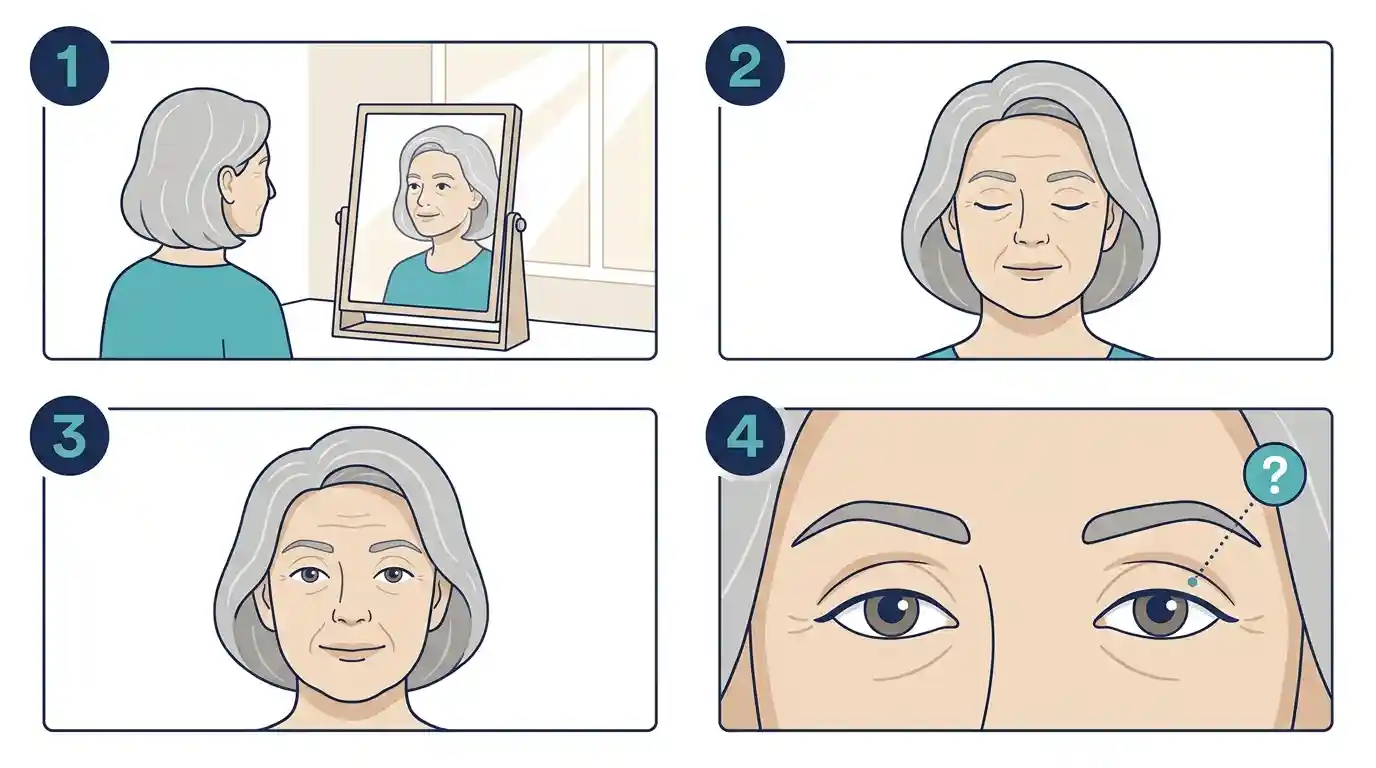
- First, sit in front of a mirror in good light.
- Next, close your eyes and relax your whole face for 10 seconds.
- Then, open your eyes slowly without raising your eyebrows.
- Finally, notice whether your lids feel heavy or you want to lift your forehead.
What Your Result Means
If you felt heaviness, your forehead may be supporting your eyelids. In that case, mention it at your consultation. As a result, a careful doctor will use a very light forehead dose or skip that area entirely.
Botox at 45 vs Botox at 70
The Goal Changes
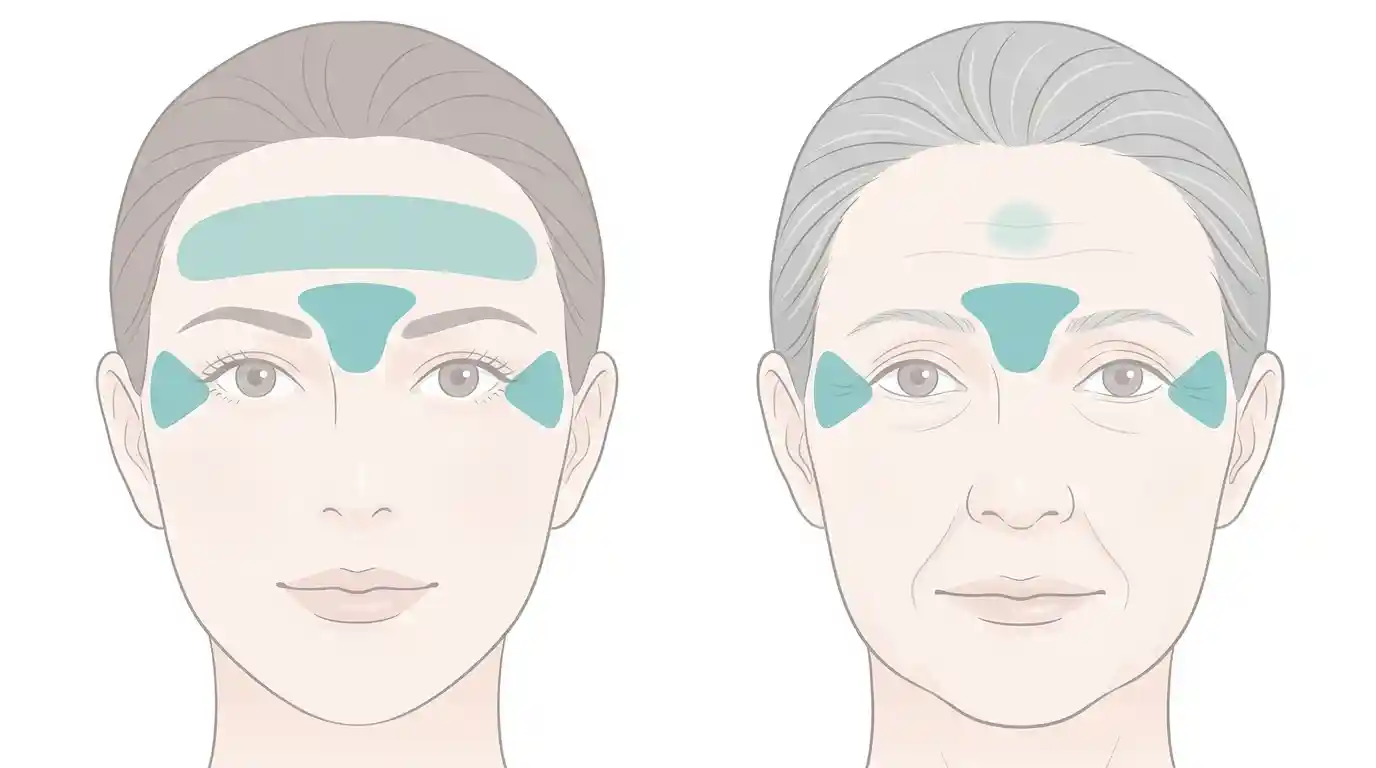
At 45, the goal is often to smooth and prevent lines. By 70, however, the aim shifts to softening lines while keeping natural expression.
The Dose Changes
Similarly, the forehead usually gets a standard dose at 45. In contrast, at 70 it often gets a very light dose, or none at all.
Results at Rest Change
Also, deep lines at rest tend to fade well in younger skin. On the other hand, in older skin they soften but rarely vanish. For this reason, fillers or skin boosters are often added.
Bruising Changes
Finally, bruising is more likely after 65. This is mainly because skin is thinner and many people take blood thinners.
What Research Says About Repeat Treatments
Here is some encouraging news. A study followed patients through three rounds of onabotulinumtoxinA treatment. As it turned out, frown lines at rest kept improving with each round. Notably, women in the oldest group (55 and over) saw some of the biggest gains.
So, a subtle first result is not a failure. Instead, it may be the start of a gradual improvement.
Myths and Facts About Botox for Seniors
Myth 1: “Botox Doesn’t Work After 65”
In fact, phase III data shows result close to those in younger patients.
Myth 2: “Older People Get More Side Effects”
Actually, headache was less common in the 65+ group in one analysis. Bruising, however, is more likely.
Myth 3: “I’ll Look Frozen”
Not necessarily. As long as the dose is conservative, natural expression stays.
Myth 4: “It Will Fix All My Wrinkles”
Unfortunately, no. Botox softens movement lines, whereas deep static lines usually need fillers too.
Myth 5: “Zinc Makes Botox Last Longer”
So far, the research is only early. By comparison, sun protection and not smoking matter far more.
Your Pre-Treatment Medication Checklist
Medicines to Mention
Before your consultation, write down every medicine you take. In particular, mention:
- Blood thinners, such as warfarin, apixaban or clopidogrel, and daily aspirin. Importantly, never stop these without your GP’s advice.
- Aminoglycoside antibiotics, for example gentamicin, because they can interact with botulinum toxin.
- Supplements like fish oil, ginkgo and vitamin E, since they may increase bruising.
Who Should Avoid Botox
On the other hand, some people should avoid treatment. This includes anyone with a neuromuscular disorder, a botulinum toxin allergy or an active skin infection. Likewise, an existing eyelid droop needs careful assessment first.
10 Questions to Ask Any Injector Before Botox After 65
Questions About Safety
- Are you a GMC-registered doctor?
- Is the clinic CQC regulated?
- Have you reviewed all my medications?
Questions About Your Treatment Plan
- Will you check my brow and eyelid position first?
- Will you use a lower dose for my first session?
- Which areas would you treat first, and why?
Questions About Aftercare and Cost
- What happens if one brow sits lower afterwards?
- Can I come back for a review or small top-up?
- Would fillers or skin boosters suit my deeper lines better?
- What is the full cost, including the consultation?
Above all, a good injector will welcome every one of these questions.
How Long Does Botox Last After 65?
Results usually begin within a few days and then settle by about a week. After that, most people enjoy results for around 3–4 months. For some, they last up to 6 months. As a result, most patients repeat treatment once or twice a year.
Anti-Wrinkle Treatment Prices in London
Our Prices
| Treatment | Price |
| Consultation (redeemable against treatment) | £100 |
| 1 area | £250 |
| 2 areas | £325 |
| 3 areas (full upper face) | £400 |
| Bunny lines / mouth corners (add-on) | £50 |
| Chin | £100 |
What’s Included
Every treatment includes a medical consultation and FDA-approved products. In addition, each injection is performed by Dr S N Abbas, and you receive written aftercare. Better still, 0% finance is available.
Book Your Consultation at Wimpole Street
Clinic Details
Dr SNA Clinic
📍 48 Wimpole Street, Marylebone, London W1G 8SF
🕙 10:00 – 18:00 (UK)
📞 +44 7955 836986 | +44 20 3846 7111
✉️ info@drsnaclinic.com | 💬 WhatsApp
👉 Book online or request a call back.
Why Patients Choose Us
Every treatment is performed by Mr Syed Nadeem Abbas, a GMC-registered doctor. Furthermore, he holds surgical training (MRCSEd) and an MSc with Distinction from Queen Mary University of London. In addition, the clinic is CQC regulated and rated 4.9 on Google.
Frequently Asked Questions About Botox After 65
Is there an age limit for Botox in the UK?
No, there isn’t. Instead, suitability depends on your health, medications and anatomy.
Does Botox work as well at 70 as at 40?
Largely, yes. In fact, trial data for patients over 65 showed response rates close to younger groups. However, deep resting lines may also need fillers.
Why is the forehead risky after 65?
Many older people use their forehead muscle to lift heavy eyelids. Therefore, over-relaxing it can make the brows and lids droop.
What is the eyelid mirror test?
It’s a simple self-check. First, relax your face. Then, open your eyes without lifting your brows and notice whether your lids feel heavy.
Can I have Botox if I take blood thinners?
Often, yes. However, bruising is more likely, so never stop prescribed medication without your GP’s advice.
How much does Botox cost for seniors in London?
At Dr SNA Clinic, one area costs £250, two cost £325 and three cost £400. In addition, the £100 consultation is redeemable against treatment.
Will I look frozen?
Not with a conservative dose. After all, the goal after 65 is softening, not freezing.
Is it worth starting Botox for the first time after 65?
Many people do. Moreover, studies suggest results can improve with repeat treatments.
Mr Syed Nadeem Abbas, MBBS, MRCSEd, MSc Aesthetic Plastic Surgery (Distinction) Medical Director, Dr SNA Clinic 48 Wimpole Street, Marylebone, London W1G 8SF GMC Registered | CQC Regulated | Monday to Saturday 10:00–18:00 +44 7955 836986 | info@drsnaclinic.com


